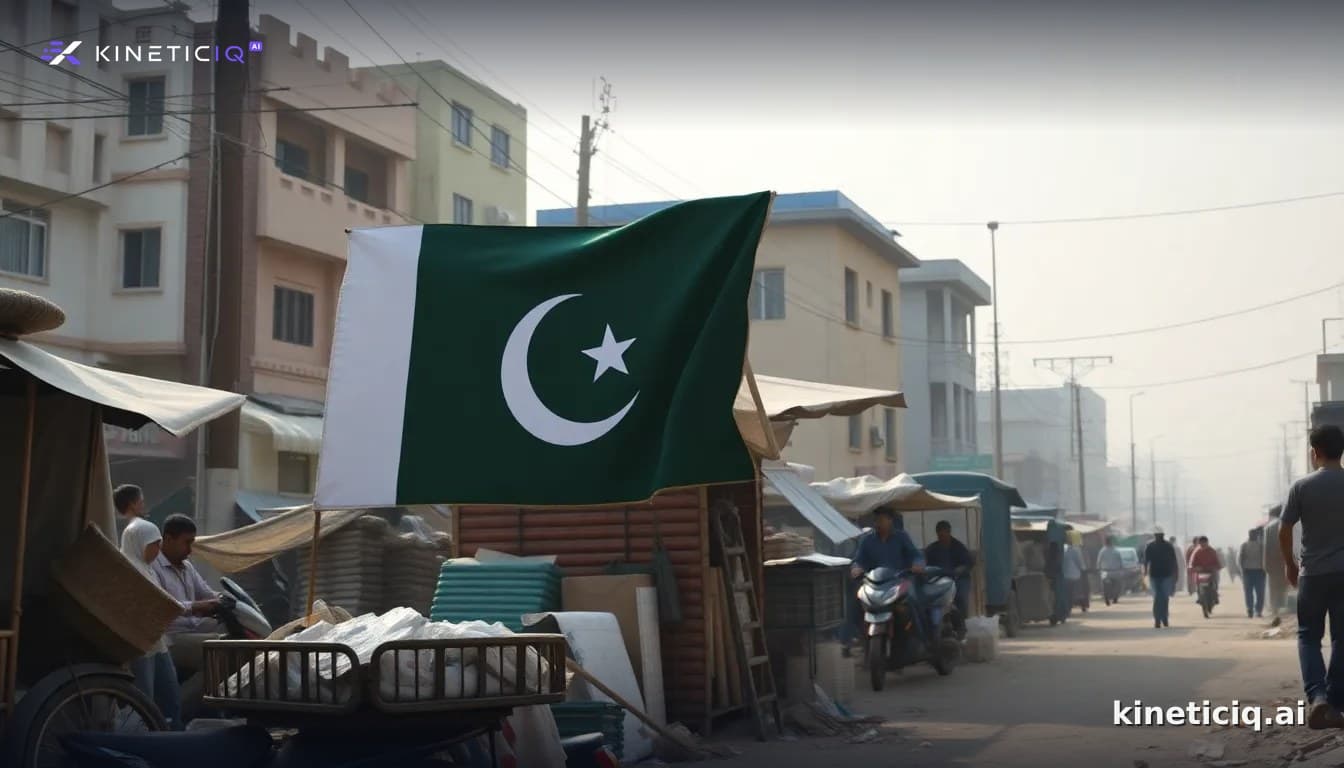
The pakistan economic conditions in 2018 were tumultuous. Political transition, external financial pressures, and severe currency devaluation converged to create a challenging landscape. As the Pakistan Tehreek-e-Insaf (PTI) government under Prime Minister Imran Khan took office on August 18, 2018, the promises of a welfare state and austerity-driven economic model faced immediate economic distress and a looming financial crisis.
Firstly, in June 2018, before PTI formally took office, Pakistan faced a significant setback when the Financial Action Task Force (FATF) placed the country on its “grey list.” This classification raised Pakistan’s external borrowing costs, complicated access to global financial markets, and deterred crucial foreign capital inflows necessary to stabilize an already fragile economy. Additionally, the country’s foreign exchange reserves declined significantly, placing immense strain on Pakistan’s ability to finance imports and service external debts. According to the State Bank of Pakistan (SBP), the country’s forex reserves witnessed a drastic reduction of approximately US$7 billion during 2018 alone.
Moreover, Pakistan experienced repeated devaluations of its national currency throughout 2018. A series of six significant interventions by the State Bank led the Pakistani Rupee to depreciate sharply, reaching approximately ₨143 against the US dollar by November 2018—a roughly 24% decline within just one year. The repeated and abrupt currency devaluations negatively affected investor confidence, intensified inflationary pressures, and increased the cost of debt repayments, further complicating Pakistan’s economic management.
Furthermore, the political promises of Imran Khan’s PTI to usher in “Naya Pakistan,” defined by transparency, austerity, and welfare-oriented governance, met immediate and daunting challenges. With a weakened rupee, declining foreign reserves, and the burden imposed by FATF compliance, Pakistan’s economic situation set the stage for an urgent financial lifeline. This economic turmoil inevitably forced the PTI government to seek assistance from the International Monetary Fund (IMF) in 2019, a move that carried profound implications for Pakistan’s subsequent economic trajectory and policy environment.
Ultimately, the confluence of political transition, external financial scrutiny by FATF, and a severe currency crisis significantly shaped Pakistan’s economic conditions in 2018, laying critical foundations for the challenging reforms and stabilization measures that would follow in subsequent years.
Pakistan Economic Challenges and Solutions
To understand the broader implications of these economic challenges, it is essential to explore the various factors that contributed to Pakistan’s economic distress. One of the key issues was the significant devaluation of the Pakistani Rupee, which had a profound impact on the country’s financial stability.
Additionally, the FATF’s grey listing exacerbated the situation by increasing Pakistan’s external borrowing costs and deterring foreign capital inflows. This external scrutiny, combined with internal political transitions, created a complex environment for economic management.
Furthermore, the IMF’s involvement in 2019 brought both opportunities and challenges. While the IMF assistance provided a much-needed financial lifeline, it also came with stringent conditions that required significant economic reforms. These reforms were crucial for stabilizing Pakistan’s economic conditions but also posed challenges for the new government.
In conclusion, Pakistan’s economic conditions in 2018 were shaped by a combination of internal and external factors. The political transition, FATF scrutiny, and currency devaluation created a challenging environment that required urgent and effective solutions. Additionally, for more detailed information on the economic conditions and their impact, refer to the IMF World Economic Outlook. For more information on the impact of tariffs on Pakistan’s economic conditions, see U.S.-Pakistan Tariff Negotiations: Strategies, Challenges, and Competitive Advantages.
Pakistan Economic Outlook
Looking ahead, the economic outlook for Pakistan remains complex. However, the government’s efforts to implement reforms and stabilize the economy are crucial steps towards a more prosperous future.